- October 27, 2025
- NurseWang
- 1:44 pm
- Uncategorized
Hot peppers.
I don’t know why I love to grow them so much. I am not a pepperhead. I don’t go chasing the hottest of peppers…Although now I say that, I certainly have grown some of the hottest peppers available: Ghost peppers, Carolina Reapers… But I usually don’t use but one or two of them each year, even though the plants I grow put on dozens of actual fruits. I usually give them away. There’s one stroy about a friend who used my Carolina Reapers without gloves and ended up touching his contact lens. I am sure you know where that ended!
I do enjoy a little heat though. More so than the rest of my family. But my cut off is generally around the Habenaro level. Hot peppers make me sweat. I mean, really sweat. Like running a Tough Mudder in the end of July in a heat wave kind of sweat. Not really ideal for around the work lunch table. But I do enjoy the heat.
Though I have grown a variety of hot peppers, each year I try to grow something different. I have grown too many varieties in the same year, and it was just chaos. I now settle on 2 different sweet peppers (in the front yard) and 2 different hot peppers (in the back yard.) For Hot Peppers, I have settled on Sugar Rush Peach and Jalapenos.
Jalapeno peppers are your every day, go to hot pepper for so many things. We love them halved, stuffed with cream cheese and spices, wrapped in bacon and smoked on the grill. (I may have to try that with some of the Sugar Rush, now that I think of it.)
The Peach Sugar Rush peppers taste nothing like peach to me. They get the name from the peachy color they get when they are ripe. They do have a very sweet impression up front, but that is followed by a heat that is close to a habanero pepper. It gives this delightfully light first impression, and then, bam! They have become my favorite hot pepper to eat or add to recipes.
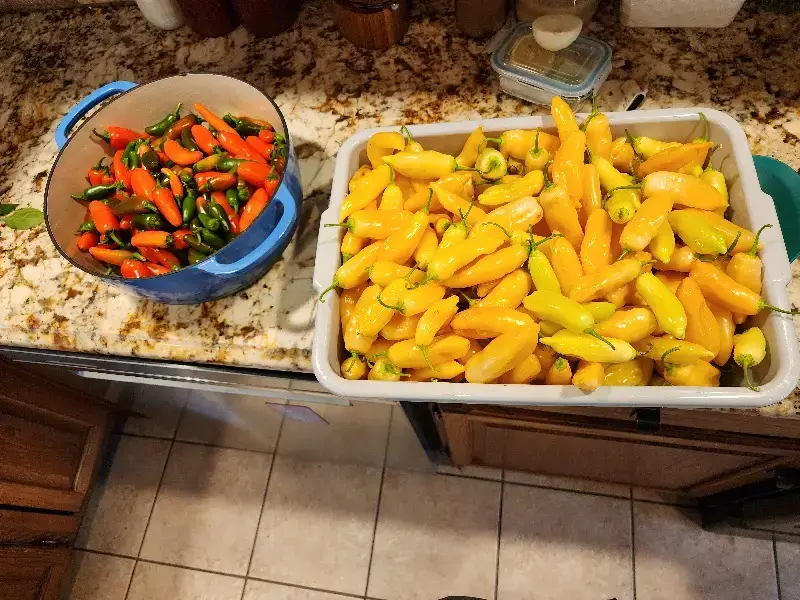
This week, I harvested all the hot peppers. The temperatures have been dropping, and my plants were overloaded, hanging down nearly to the ground from a 2 foot tall raised wicking bed. I wanted to get them inside before they started to suffer the effects of the cold nights.
Growing Peppers in Raised Beds
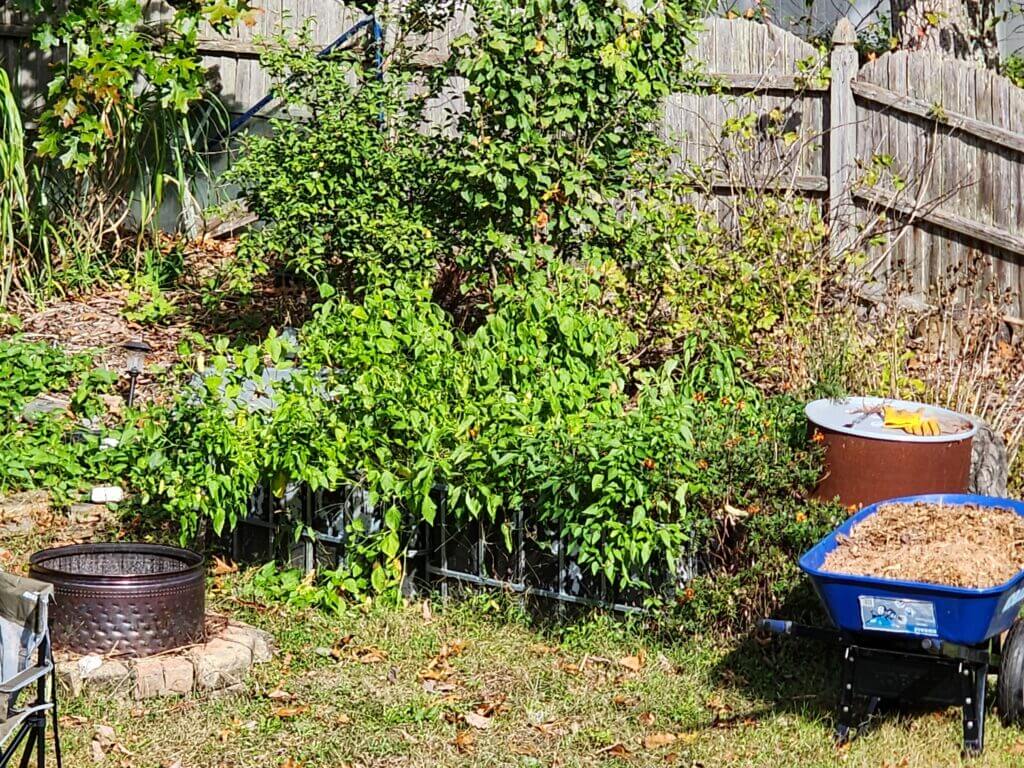
My peppers grow in raised wicking beds made from a single IBC tote cut in half to form two planters. Each bed holds a layered system built for drainage and consistency. The bottom is filled with river rock, topped with a weed barrier and sand, and finished with twelve to fourteen inches of rich soil. That soil began as a mix of organic compost from Danbly’s Garden Center blended with perlite for aeration and rabbit manure for nutrition. Every year I continue to add fresh rabbit manure to the surface as a slow-release amendment that keeps the beds fertile and alive.
The wicking design holds water in a reservoir below the soil, but with our rainfall I rarely need to fill it manually. Though the system can connect to my pond by pump, natural rain is usually enough to maintain moisture. The result is deep, even hydration that helps peppers thrive without waterlogging the roots.
I plant only two varieties in these beds now, the Orange Jalapeño and the Sugar Rush Peach. Both have adapted well to this system and produce heavy yields with strong, healthy plants. Marigolds share the space as companions, deterring pests and adding color among the foliage. The soil also houses compost worms that help keep nutrients cycling through the growing season.
The beds sit in full sun for about eight hours each day. Trees to the west cast shade in late afternoon, shielding the plants from the most intense heat. Peppers need strong sunlight to develop flavor and heat, but that bit of evening protection prevents stress during the hottest part of summer. The balance of light, moisture, and living soil makes these raised beds an ideal environment for consistent, flavorful harvests.
Harvesting at Peak Ripeness
This year’s pepper harvest came in mid-October, later than usual. The plants had gone in behind schedule because of a busy season, and the heat of summer slowed their progress. Once the extreme temperatures broke, the plants responded with renewed growth and a heavy flush of fruit. The result was a strong late harvest that filled the beds with color.
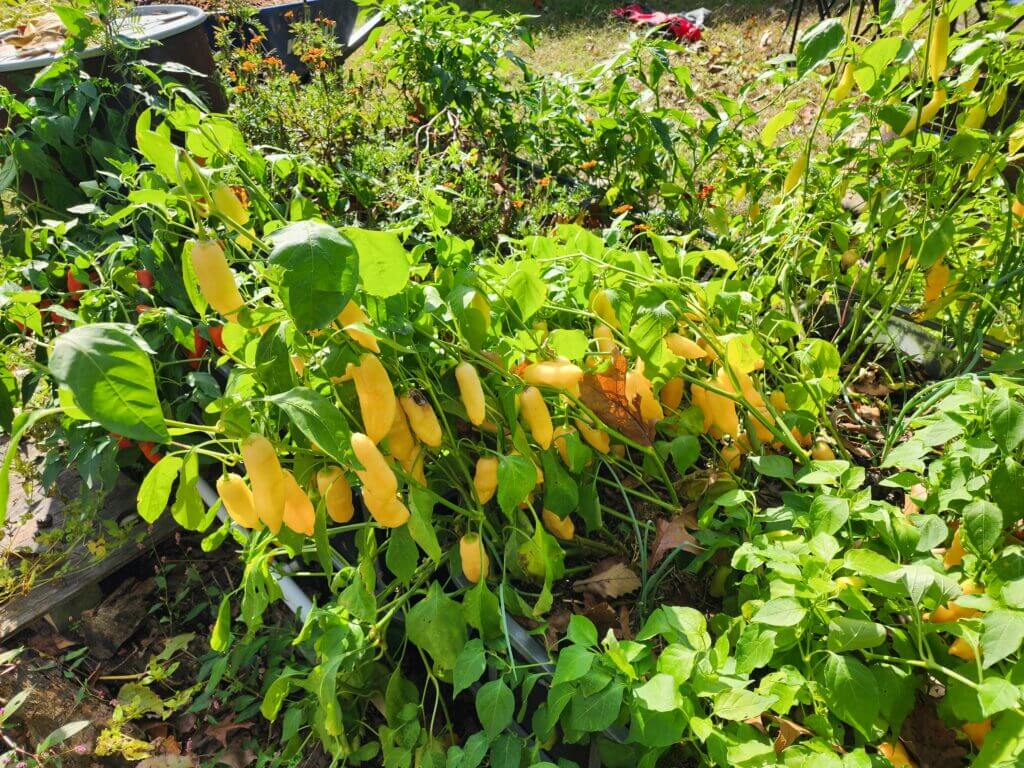
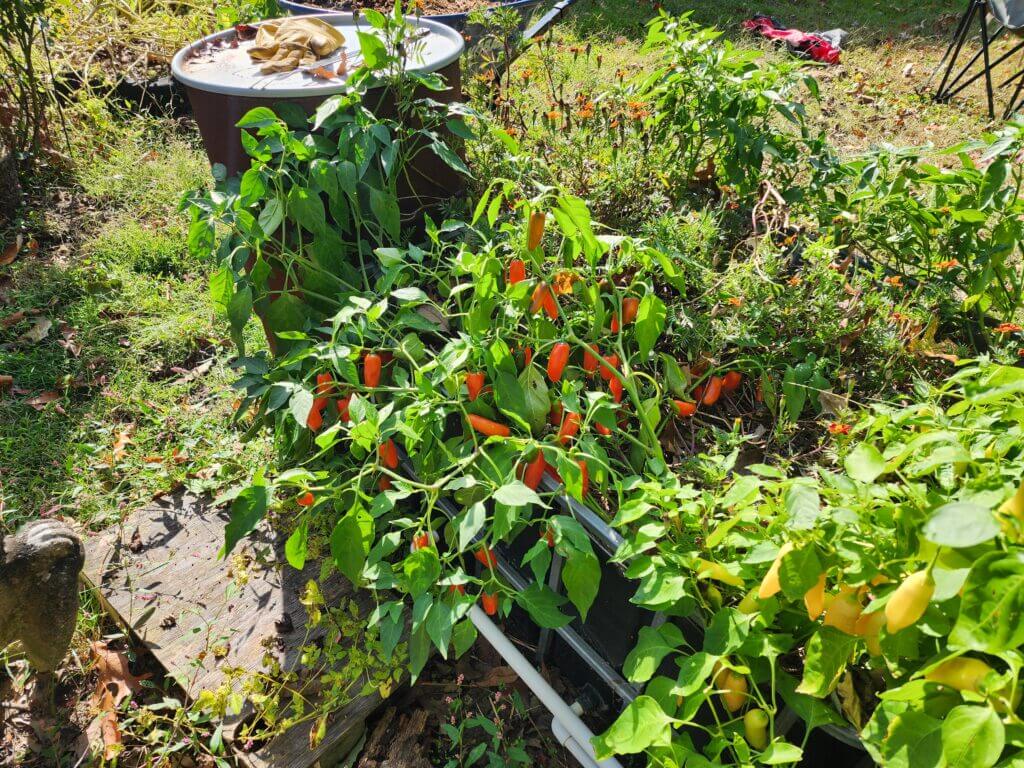
The Orange Jalapeños signaled readiness with their change from green to deep orange. At that stage they developed their best flavor, a mix of mild sweetness and heat. The Sugar Rush Peach peppers followed their own rhythm, shifting from pale green to a soft peach-orange tone when ripe. Their color hinted at the fruit-forward flavor that makes them my favorite variety.
I usually harvest peppers gradually as they ripen, but this year I made one large picking before the first cold nights. The risk of frost was near, and I did not want to lose the crop. I pulled each pepper by hand, careful not to damage the stems or the next season’s growth. I do not wear gloves when harvesting, reserving them for processing later in the kitchen.
Once picked, I sort the peppers quickly to preserve quality. Some go straight into hot sauce, others into homemade ketchup, and a portion is diced and frozen for later use. The remainder often finds its way to friends and coworkers. The harvest marks both the end of the growing season and the beginning of new flavors that will last through winter.
Preparing the Peppers for Sauce
I leave the peppers as they are until it is time to make the sauce. Before use, I give them a light rinse to remove any soil or residue from the garden. Clean peppers make a cleaner sauce, and it helps preserve the bright, natural flavor.
When handling the hot varieties, I wear gloves after cutting. Whole peppers are safe to touch, but once they are sliced open, the capsaicin can irritate the skin. I remove stems from all the peppers and decide how many seeds to keep based on the desired heat level. Removing seeds tames the spice, while leaving some in keeps the sauce lively and hot.
This year I roasted the peppers, onions, and peaches over the grill until they developed a light char. The roasting brings out their sweetness and adds a smoky depth that blends perfectly with the heat. Once the skins begin to blister, I pull them off the grill, scoop out the seeds, and place everything in the blender. I use a Ninja blender to puree the mixture until smooth.
After blending, I transfer the mix into a large stainless steel pot and cook it down slowly. The sauce thickens as the flavors meld together. Stirring often prevents scorching and allows me to reduce the mixture to the texture I want. Roasting, blending, and simmering each play a role in transforming the garden’s harvest into a balanced, flavorful hot sauce.
Peach Hot Sauce Recipe
This year’s peach hot sauce was a simple recipe with a few key adjustments to bring out the best flavors from the garden. I started with a base formula that uses Sugar Rush Peach peppers, peaches, garlic, vinegar, and a touch of sweetness. My version adds roasted ingredients, raw honey instead of sugar, and a final pressure canning step for long-term storage.
Ingredients:
- About 20 Sugar Rush Peach peppers, washed and diced
- 2 cups peaches (fresh or frozen, thawed)
- ½ medium onion, sliced
- 2 cloves garlic, chopped
- 2 cups apple cider vinegar
- 1 tablespoon lime juice
- 2 tablespoons raw honey (adjust to taste)
- Salt to taste
Preparation:
I began by roasting the peppers, onions, and peaches on a gas grill until lightly charred. The heat softened the fruit and deepened the flavor, though I would recommend using a smoker for an added layer of complexity. Once roasted, I removed the stems from the peppers and transferred everything to a blender with the garlic, lime juice, and vinegar. After blending until smooth, the mixture went into a stainless steel pot where I added honey and salt.
The sauce was brought to a boil, then reduced to a gentle simmer for about twenty minutes. This step melded the sweetness of the peaches with the tang of the vinegar and the subtle fruitiness of the Sugar Rush Peppers. Once thickened, I strained the sauce for a smooth finish, then poured it into pint jars for canning. Using my Carey electric pressure canner, I processed the jars for thirty minutes, ensuring a safe seal. I made a total of six pints and one quart of finished sauce.
The final result was a medium-heat sauce with a sweet, fruity start and a warm, complex finish. It pairs well with grilled chicken wings, soups, or anything that could use a bit of brightness and spice. The roasted ingredients give it depth, while the peaches and honey balance the heat into something approachable yet bold.
Lessons from the Homestead Kitchen
Each year’s harvest teaches something new. Making peach hot sauce has become more than a recipe. It is a reminder of why I grow food in the first place. When the peppers ripen all at once and the cold nights approach, preserving them into something that lasts becomes both practical and rewarding. Hot sauce is one of many ways I stretch the harvest through the seasons, but it also carries the story of my garden into the months ahead.
On a small property, abundance often comes in waves. One week it’s peppers, another week it might be tomatoes or herbs. Learning to preserve what the garden gives is the difference between waste and provision. I freeze extra diced peppers for soups and stir-fries, and sometimes dehydrate fruit or vegetables for later use. Canning remains my main method because it keeps food shelf-stable without electricity, while freezing makes quick use of the surplus. I plan to add freeze-drying eventually for even longer storage.
This season reminded me of the importance of timing. I planted late and paid for it with slow summer growth. Once the worst heat passed, the peppers surged, but next year I’ll get them in sooner. Gardening is a steady teacher. Each year’s success and failure gives something to build on.
Sharing the results with family and friends brings joy, but it also reinforces why I do this work. The food grown here is clean, natural, and full of life. It has not been sprayed, fumigated, or shipped across the country. Each jar and freezer bag is a piece of food security, and that security feels like freedom. It is a comfort to open a jar in January and know what’s inside came from soil I tended myself.
For anyone new to preserving, my advice is simple: start. Even if it’s messy or uncertain, it is better than letting good food go to waste. Try a recipe that excites you, make adjustments, and learn what works. Success or failure, nothing is lost. What you don’t eat can return to the soil as compost and fuel next year’s growth.
Preserving food is more than efficiency. It is stewardship. Each act of canning, freezing, or drying honors the work already done in the garden. It keeps the ecosystem turning: scraps feed the chickens, their manure feeds the soil, and the soil feeds us again. The more I grow, the more I realize how much good can come from half an acre used wisely. Every pound of food raised here is one that did not rely on chemical inputs or long-distance transport.
Working this way strengthens both the land and the community. It feeds my family, but it also offers something back to those around me. That, to me, is what the homestead kitchen is all about—turning what we grow into nourishment that lasts, and learning through the process how to live with greater care and gratitude.
Faith Reflections
As I worked with the Sugar Rush Peach and Orange Jalapeño peppers, I thought about their heat. A single taste can bring a sharp burn that lingers, reminding you of its strength long after the bite is gone. It made me think about another kind of fire, one far greater and eternal. Scripture describes a place where that fire never ends, where those apart from God will face judgment. It is not a pleasant thought, but it is a necessary one.
In Matthew 13:40–42 (NKJV), Jesus said:
“Therefore as the tares are gathered and burned in the fire, so it will be at the end of this age. The Son of Man will send out His angels, and they will gather out of His kingdom all things that offend, and those who practice lawlessness, and will cast them into the furnace of fire. There will be wailing and gnashing of teeth.”
That passage reminds us that sin has a destination. Each of us has sinned and stands guilty before a holy God. The same God who is just is also merciful, and He has made a way for us to escape that fire. Through Jesus Christ, forgiveness is offered freely to anyone who believes.
The Bible says in Acts 16:31 (NKJV): “Believe on the Lord Jesus Christ, and you will be saved.”
That promise still stands. Christ not only forgives sin but gives His righteousness to all who trust in Him. The work is already finished. The decision is ours to make.
As you taste the heat of a pepper, take a moment to reflect. Life is brief, but eternity is not. Ask yourself where you stand. There is hope in Christ, peace in forgiveness, and new life in walking with Him. The fire of the pepper fades, but the fire of judgment does not have to be your story. Believe on Him and live.
Conclusion
As the season draws to a close, I find myself grateful for what the garden has given. Each harvest, each jar on the shelf, and each small success adds up to something larger than the work itself. The soil continues to teach me patience, and the plants remind me that everything has its time.
The peppers, peaches, and every other crop grown this year came from care, faith, and the willingness to keep learning. Some plants thrived, others struggled, but together they painted a picture of what persistence can yield. I am reminded that nothing grown here is wasted. What is eaten strengthens the body, and what is left returns to the earth to begin again.
The homestead changes me a little more each year. It teaches quiet lessons about stewardship, resourcefulness, and gratitude. Standing in the garden at the end of the season, surrounded by empty vines and full jars, there is peace in knowing the land has once again provided. The work may rest for a while, but its rewards will carry us through the winter.
Pingback: How To Make Hot Pepper Powder At Home